
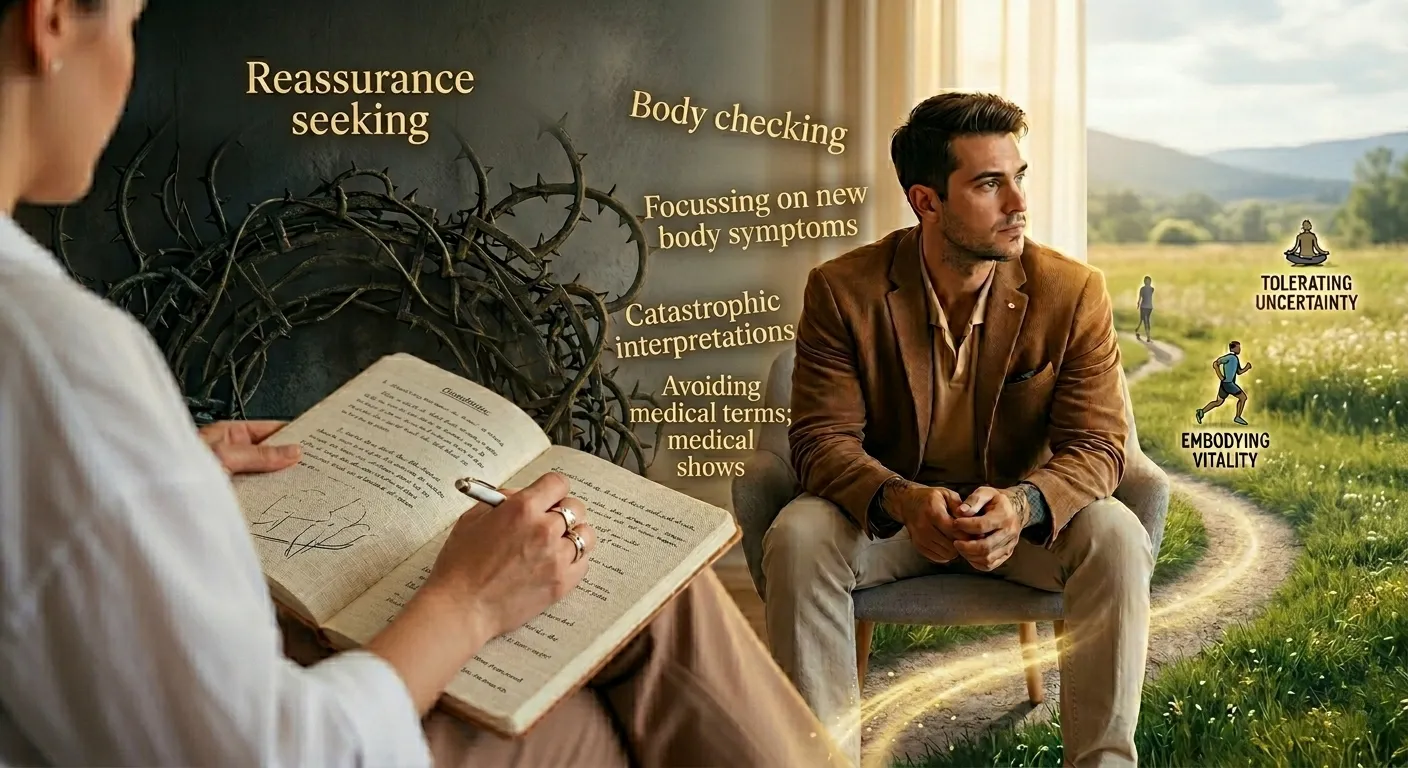
If you struggle with health anxiety, reassurance can feel like relief-initially. You notice a bump, a new pain, a new symptom, your mind jumps to the worst-case scenario, and suddenly you feel an urgent need to know you’re okay. So you Google, check your body, ask your partner, trusted friend, parent what they think, review what the doctor said, or even book another appointment. For a little while, you might feel calmer. But then the doubt returns: What if they missed something? What if I didn’t explain it properly? What if this time it really is serious?
The problem is that reassurance answers the fear only temporarily. It gives your brain the message: I felt scared, I checked, and then I felt better. So the next time anxiety shows up, your brain pushes you to check again.
Over time, the cycle gets stronger. The relief is real, but it doesn’t last, because health anxiety is rarely satisfied with reasonable reassurance. It wants perfect certainty — and the human body can’t provide that.
This doesn’t mean you should ignore your health or avoid appropriate medical care. There is a difference between responding wisely to a concerning symptom and trying to eliminate every possible doubt.
Healthy care sounds like, “I’ll follow medical advice and then return to my life.” Health anxiety sounds like, “I need to keep checking, researching, asking, and monitoring until I feel completely certain nothing is wrong.”
Healing from health anxiety often means learning to tolerate uncertainty, reduce reassurance-seeking, and relate to body sensations with more steadiness. Instead of asking, “How do I make sure nothing is wrong?” the work becomes, “Can I notice this fear without obeying it?” Over time, your brain can learn something more powerful than reassurance: I can feel uncertain and still be okay.